


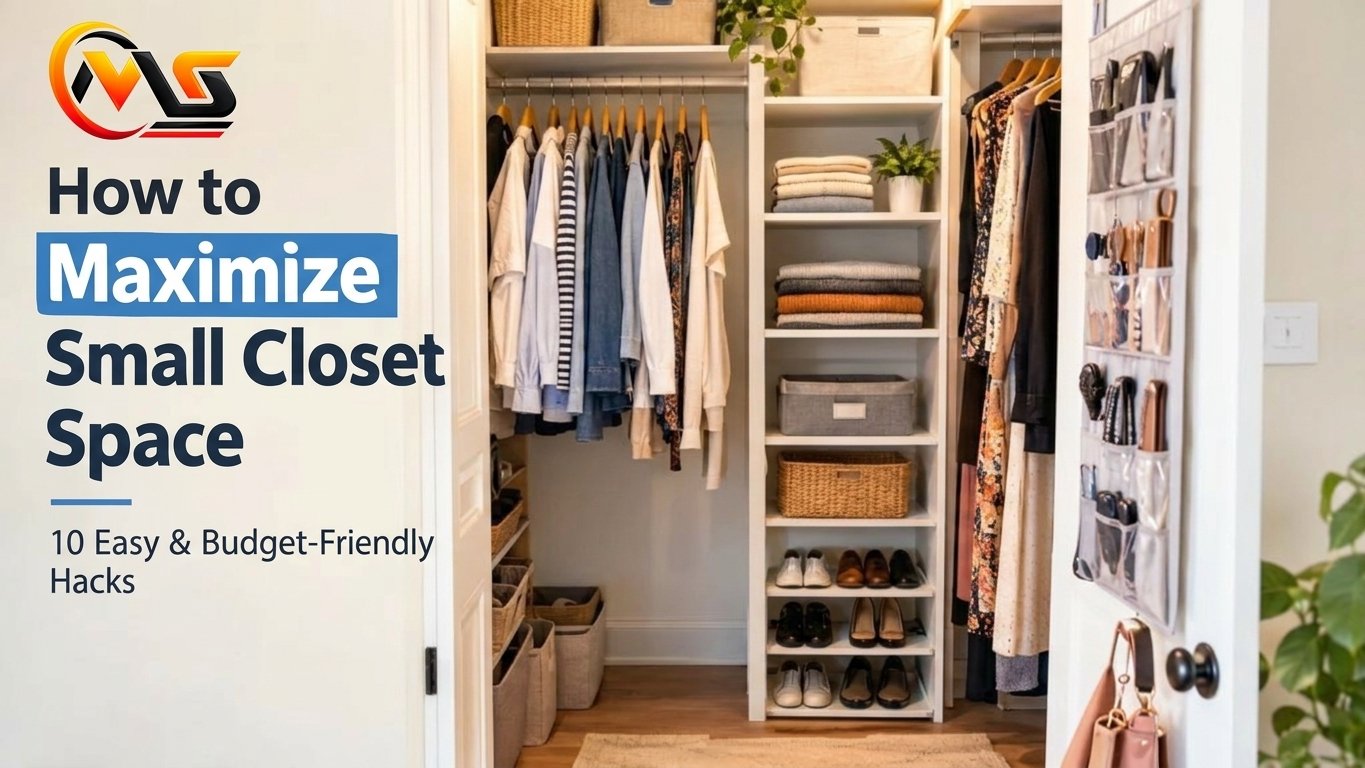
A small closet can quickly become frustrating when clothes are squeezed together, shoes cover the floor, and finding one outfit means moving everything else. The good news is that you do not need a walk-in wardrobe or an expensive renovation to maximize small closet space. A few affordable changes can make your existing closet more practical, organized, and easier to use every day.
The secret is to make better use of vertical space, choose storage accessories wisely, and keep only what you actually need. From slim velvet hangers to over-the-door organizers, these budget-friendly closet organization ideas can help you create extra room without replacing your entire wardrobe. With a little planning, even a narrow closet can hold more while looking neat and inviting.
Quick Summary: How to Maximize Small Closet Space
- Declutter first: Remove clothes you no longer wear to free up valuable space.
- Double hanging rods: Use a second rod to create another level for shorter garments.
- Slim velvet hangers: Replace bulky hangers with thin, nonslip alternatives.
- Use vertical space: Add shelf dividers, door organizers, and hooks.
- Store seasonal items: Pack clothes you rarely need in vacuum storage bags.
Step 1: Declutter and Audit Before Organizing
Before buying storage products, examine everything inside your closet. Adding organizers to an overcrowded wardrobe will not solve the underlying problem. Start by taking everything out and sorting your belongings into three groups: keep, donate, and toss.
- Keep: Clothes that fit, suit your lifestyle, and you wear regularly.
- Donate: Clean, wearable garments you no longer need or want.
- Toss: Items that are badly damaged, stained, or beyond repair.
Consider clothes you have not worn in the past 6–12 months, but make exceptions for seasonal clothing, special occasions, and essential items. Next, group your remaining belongings into categories such as shirts, trousers, dresses, jackets, shoes, and accessories.
This simple closet decluttering method shows which items need hanging space and which can be folded. Measure the closet’s height, width, and depth before purchasing organizers so you do not waste money on products that do not fit.
10 Smart Ways to Maximize Small Closet Space
1. Switch to Slim Velvet Hangers

Bulky wooden and plastic hangers can consume a surprising amount of closet space. Slim velvet hangers have a narrow profile that allows garments to sit closer together, while their textured surface helps prevent clothes from slipping off.
Replace your thick hangers gradually rather than purchasing an expensive complete set immediately. Choose sturdy hangers that support the weight of your clothing, especially coats and heavy jackets.
Although the amount of space saved depends on your existing hangers and closet size, thinner designs can make a noticeable difference. Matching hangers also create a cleaner, more organized appearance.
2. Install a Secondary Hanging Rod

One of the most effective small closet storage hacks is to use the unused vertical space beneath your existing hanging rail. A secondary rod or adjustable hanging-rod extender creates another level for shorter garments.
Place shirts, blouses, skirts, and folded trousers on the lower rod, leaving longer dresses and coats on the upper section. Check the available height before installing anything to ensure clothes do not drag against the floor or lower shelves.
Choose a rod extender that fits your closet’s dimensions and weight requirements. A properly fitted second rail can substantially increase hanging capacity without requiring a complete closet makeover.
3. Utilize Over-the-Door Organizers
The back of a closet door is often wasted space. An over-the-door organizer adds useful storage without taking up room on the hanging rail or shelves.
Choose a pocket organizer for scarves, belts, small handbags, socks, or lightweight accessories. Clear pockets make it easier to identify items quickly, while shoe organizers can hold frequently worn footwear.
Before purchasing one, measure the door and check the clearance between the door and nearby shelves. Avoid overloading the organizer, and ensure it does not interfere with the door closing properly.
4. Add Stackable Shelf Dividers
Folded sweaters, jeans, towels, and bags can easily turn into untidy piles. Closet shelf dividers help separate these items, preventing one stack from collapsing into another.
Use adjustable acrylic or wire dividers that fit your existing shelves. Stackable shelf organizers can also create separate sections for folded clothes and smaller accessories.
Keep heavier items on lower shelves and lighter belongings above them. Avoid making stacks so tall that you need to remove several items just to reach the one underneath.
5. Use Tiered or Cascading Hangers

If your closet has limited hanging-rail space, tiered hangers can help you organize several garments vertically. Depending on the design, one hanger may hold multiple pairs of trousers, skirts, or tank tops.
You can also use purpose-made cascading hangers with rotating hooks. Some people use soda-can tabs as an inexpensive alternative for linking compatible hangers, but proper cascading hangers are generally more stable and easier to handle.
Do not overload a single hook. Too much weight can damage the hanger or put unnecessary strain on the closet rail.
6. Store Off-Season Clothes in Vacuum Bags

Heavy winter jackets, thick blankets, and seasonal clothing can occupy valuable space throughout the year. Vacuum storage bags reduce the volume of suitable soft items, making them easier to store on high shelves or under a bed.
Wash and completely dry garments before packing them. Follow the manufacturer’s care instructions, especially for delicate fabrics, leather, down-filled coats, or structured clothing that may not tolerate compression.
Label each bag with its contents and season. This simple step prevents unnecessary unpacking whenever you need a particular item.
7. Add Pull-Out Bins or Fabric Baskets
Small items often create the biggest mess because they lack designated storage. Fabric baskets and pull-out bins provide a simple solution for socks, underwear, workout clothes, belts, and accessories.
Choose containers that fit the available shelf depth so they slide out easily. Label each bin according to its contents, and avoid filling every container to the top.
If your closet has open shelves, matching baskets can also make the space look more coordinated. Affordable fabric bins are particularly useful because they are lightweight and easy to move when cleaning.
8. Maximize Floor Space With Low Shoe Racks

Shoes scattered across the closet floor make a small wardrobe feel even more cramped. A slim two-tier shoe rack keeps footwear together while leaving more floor space available for other belongings.
For additional flexibility, consider stackable shoe boxes or an over-the-door shoe organizer. Clear boxes help you identify pairs without opening every container, while a narrow rack provides easy access to frequently worn shoes.
Keep everyday footwear near the front and move occasional or seasonal pairs to less accessible storage. Make sure the rack does not block the door or reduce walking space.
9. Hang Hooks for Bags and Accessories
Unused side walls can provide valuable vertical closet storage. Adhesive hooks or removable wall hooks can hold belts, caps, lightweight bags, scarves, and frequently used accessories.
Choose hooks according to the surface and the weight they must support. Follow the manufacturer’s installation instructions and weight limits, particularly on painted walls or delicate surfaces.
Arrange accessories by type so you can find what you need quickly. For heavier handbags, use securely installed hooks that are appropriate for the wall material rather than relying on lightweight adhesive products.
10. Brighten Up With Motion-Sensor Closet Lights

A dark closet can make organized belongings difficult to see, especially on deep shelves and in the corners. Affordable motion-sensor LED closet lights improve visibility without requiring complicated electrical work.
Battery-powered, stick-on lights are convenient for closets without nearby outlets. Choose a model with sufficient brightness, an appropriate sensor range, and easy battery replacement.
Position lights where they illuminate shelves and hanging clothes without creating harsh shadows. Better lighting does not physically increase storage capacity, but it helps you use existing space more efficiently and avoid buying items you already own.
Frequently Asked Questions
1. How can I organize a small closet with too many clothes?
Start by removing items you no longer wear, then group the remaining clothes by category. Use slim hangers, shelf dividers, labeled bins, and seasonal storage bags to make better use of the available space.
2. How do you double hanging space in a small closet?
Install a compatible hanging-rod extender beneath the existing rail. Use the lower level for shorter clothes and keep long dresses or coats on the upper rail. Check the closet height and weight limits before installation.
3. What is the best way to store shoes in a small closet?
A slim shoe rack, clear stackable shoe boxes, or an over-the-door shoe organizer can help. The best choice depends on your door clearance, available floor space, and how many pairs you need to store.
4. How can I maximize closet space without spending much money?
Declutter first, rearrange existing shelves, group similar clothes, and reuse suitable boxes or baskets you already own. Buy only the organizers that solve a specific storage problem.
Conclusion
Learning how to maximize small closet space does not require expensive furniture or a complete renovation. Start with decluttering, switch to slim hangers, make better use of vertical space, and organize smaller belongings with baskets, hooks, and shelf dividers.
You do not need to try all ten hacks at once. Choose two or three solutions that address your biggest storage problems, then adjust your arrangement as needed. Regularly reviewing your belongings will also help prevent clutter from returning.
Which closet organization hack will you try first? Share your favorite space-saving tip to help other readers make the most of their small closets.
Also Read: How to Get a $6,000 Grant for School: Step-by-Step Application Guide
