


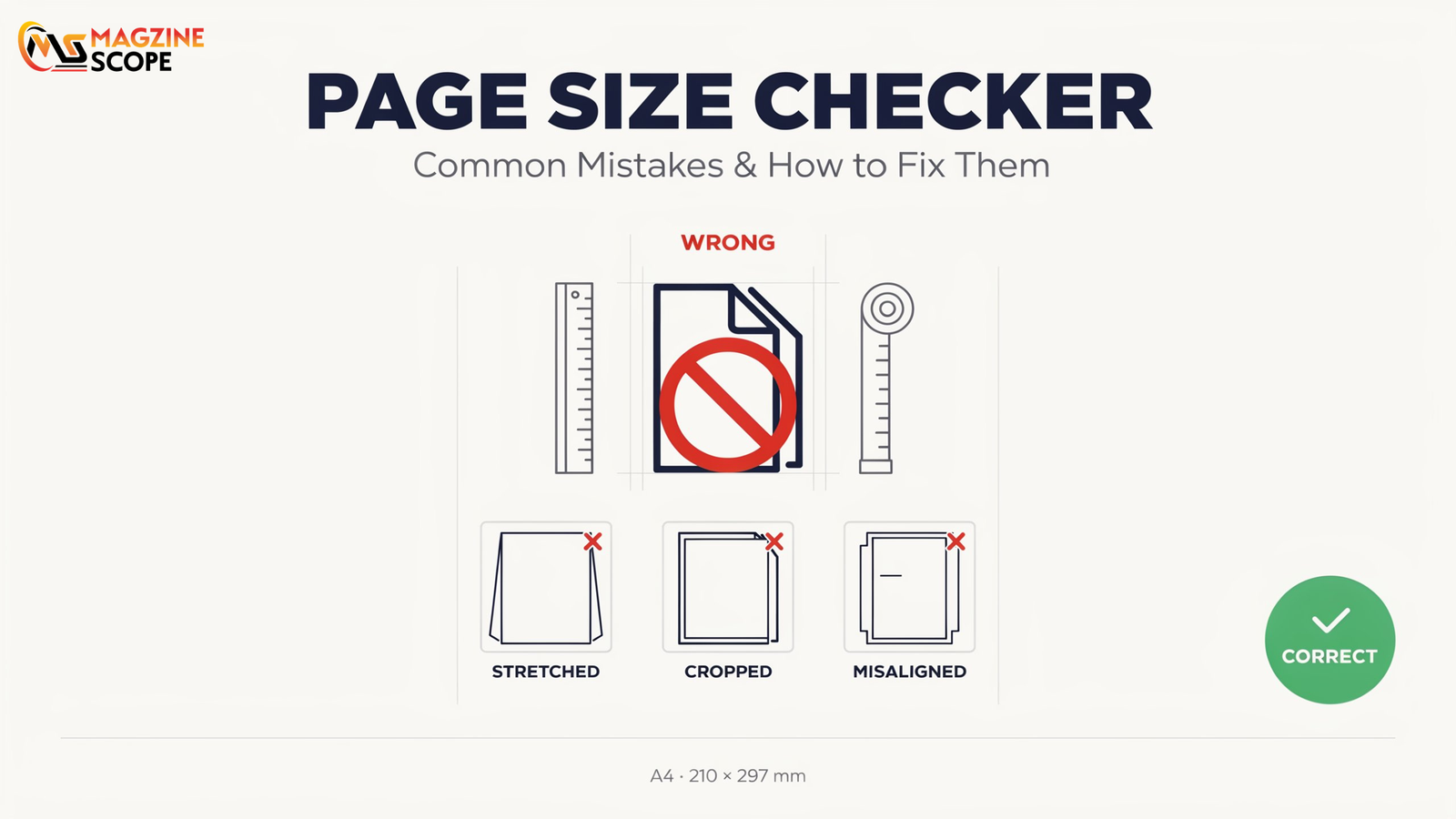
If you’ve searched for page size checker spell mistake, you may have noticed that the phrase itself can be confusing. Many users accidentally type incorrect spellings while looking for a page size checker, a tool that helps measure the size of web pages, files, or documents. Search engines usually understand these mistakes and still provide relevant results, but knowing the correct term can save time and help you find better tools.
A page size checker is useful for website owners, bloggers, developers, students, and anyone who wants to monitor file sizes or optimize web performance. Whether you’re checking the size of a webpage before publishing or trying to improve loading speed, understanding how these tools work is valuable. This guide explains the meaning of page size checker spell mistake, its benefits, practical uses, common challenges, and simple ways to get started without technical knowledge.
What is Page Size Checker Spell Mistake?
The phrase page size checker spell mistake usually refers to a spelling error made while searching for a page size checking tool. Instead of typing the correct keywords, users may accidentally misspell words like “checker,” “page,” or “size.” Modern search engines often recognize these mistakes and suggest the intended search automatically.
A page size checker itself is an online tool or software that measures the total size of a webpage or document. It can show how much data a page loads, including images, scripts, stylesheets, and other resources. This information helps users improve website performance, reduce loading time, and create a better experience for visitors.
Understanding the correct spelling also helps you discover more reliable resources, accurate tutorials, and trusted optimization tools.
Main Features and Benefits
A page size checker offers several practical advantages for both beginners and experienced users. While different tools provide different features, most focus on helping users understand and improve page performance.
- Measures total page size: Displays the overall size of a webpage or document.
- Improves website speed: Helps identify pages that load slowly because of large files.
- Supports SEO efforts: Faster pages often perform better in search engine rankings.
- Easy to use: Most online checkers require only a webpage URL.
- Identifies large resources: Highlights images, scripts, or files that increase page size.
- Useful for beginners: No advanced technical knowledge is required.
- Saves bandwidth: Smaller pages consume less internet data for visitors.
- Encourages better user experience: Faster websites generally keep visitors engaged for longer.
How Beginners Can Get Started
Getting started with a page size checker is easier than many people expect. First, choose a reliable online page size checking tool and enter the webpage address you want to analyze. Within a few seconds, the tool usually generates a report showing the total page size along with the files contributing to it.
After reviewing the results, pay attention to unusually large images, videos, JavaScript files, or CSS resources. These are often responsible for increasing loading times. Compressing images, removing unnecessary scripts, and enabling file compression can significantly reduce page size.
If your search began because of a page size checker spell mistake, simply use the correct spelling in future searches to discover more accurate resources and better optimization guides.
Comparison Table
| Feature | Page Size Checker Spell Mistake | Alternative Method |
|---|---|---|
| Search Accuracy | May lead to corrected search suggestions | Uses the correct search phrase directly |
| Ease of Finding Tools | Sometimes slower due to spelling errors | Faster and more accurate results |
| User Experience | Can create confusion | Clear and straightforward |
| SEO Learning | Helps users recognize common keyword mistakes | Encourages proper keyword usage |
| Performance Analysis | Available after reaching the correct tool | Immediate access to analysis tools |
Practical Tips
One of the easiest ways to avoid a page size checker spell mistake is to bookmark a trusted page size checking tool after finding it. This eliminates the need to search repeatedly and reduces the chances of entering incorrect spellings.
Another helpful practice is to focus on optimizing large media files before publishing a webpage. High-resolution images and unnecessary scripts often contribute more to page size than people realize. Compressing these resources can improve loading speed without sacrificing quality.
It’s also beneficial to review page size regularly instead of checking it only once. As websites grow with new content, plugins, and design updates, page size naturally increases. Periodic monitoring helps maintain consistent performance and prevents small issues from becoming major problems.
Common Challenges
Many beginners assume that a larger webpage automatically means better quality, but this is rarely true. Heavy pages often load more slowly, especially on mobile devices or slower internet connections. A page size checker helps identify these issues before they affect visitors.
Another common challenge is misunderstanding search results caused by a page size checker spell mistake. Although search engines frequently correct spelling errors, they may also display unrelated results. Learning the proper terminology makes future searches more accurate and efficient.
Some users also feel overwhelmed by technical reports generated by page size checking tools. Fortunately, most modern tools use simple charts and summaries that make it easy to understand which files require optimization.
Step-by-Step Action Plan
Start by searching for a reliable page size checking tool using the correct spelling to avoid unnecessary confusion. Enter the webpage URL and review the generated report carefully, paying close attention to large images, scripts, and downloadable resources. After identifying the biggest contributors to page size, optimize them by compressing images, removing unused files, and enabling browser caching where possible.
Once the improvements are complete, run the page size checker again to compare the updated results with the previous report. Continue monitoring your pages whenever you publish new content or redesign your website. Over time, this simple routine helps maintain fast loading speeds, improve user experience, and support better search engine visibility.
Why Page Size Checker Spell Mistake Matters Today
The phrase page size checker spell mistake reflects a common challenge faced by internet users every day. People frequently make typing errors, especially when searching quickly on mobile devices or unfamiliar keyboards. Fortunately, search engines have become smarter at recognizing these mistakes, making it easier to reach the intended destination.
Website performance has become more important than ever because users expect fast-loading pages regardless of their device. Businesses, bloggers, educators, and developers all benefit from monitoring page size regularly. A lightweight website improves user satisfaction, reduces bounce rates, and often supports stronger SEO performance.
As websites continue becoming more interactive with videos, animations, and advanced features, page size optimization will remain an essential part of web development. Learning the correct terminology today makes future searches faster and helps users find the most reliable optimization resources.
Conclusion
Understanding page size checker spell mistake is about more than correcting a typing error. It also introduces an important concept in website optimization and digital performance. By using the correct search terms, beginners can quickly locate reliable page size checking tools and learn how to improve loading speed, reduce file sizes, and create a better browsing experience for visitors.
Regularly checking page size helps identify performance issues before they become serious problems. Even small improvements, such as compressing images or removing unnecessary files, can make a noticeable difference. Whether you manage a personal blog, business website, or educational project, using a page size checker consistently is a smart habit. Combined with accurate searches and ongoing optimization, it supports better usability, stronger SEO, and a faster web experience for everyone.
FAQs
1. What does page size checker spell mistake mean?
It usually refers to a spelling error made while searching for a page size checker tool online.
2. Can a page size checker improve SEO?
Yes. A page size checker helps identify large files that may slow your website, supporting better SEO performance.
3. Why is page size important?
Smaller pages generally load faster, improve user experience, and reduce bandwidth usage.
4. Do search engines correct a page size checker spell mistake?
Most modern search engines automatically suggest the correct spelling and display relevant results.
5. How often should I use a page size checker?
It’s a good idea to check page size whenever you publish major updates or add new content to your website.
Also read : Where to Download UStudioBytes Safely: Complete Beginner’s Guide (2026)
